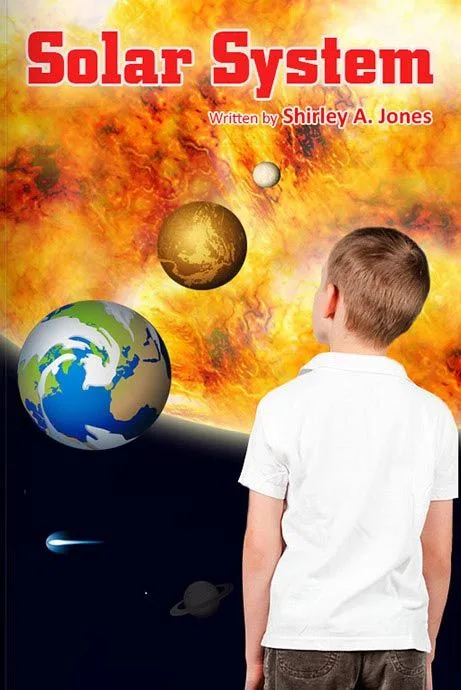
Solar System
Learn about the solar system which is made up of planets
About this book
Solar System is an easy readers book for children ages 5 to 7. Learn about the solar system which is made up of planets, moons, asteroids, comets, and many other exciting objects. A real human voice reads the story while the words are highlighted one by one on screen.
Book details
| Book type | Read Along Book – Narrated in a real human voice with word-by-word highlighting and static pictures. |
|---|---|
| Author | Shirley A. Jones |
| Ages | 5 to 7 years |
| Grade | Grade 1 |
| Reading level | Level 2, Easy Readers |
| Length | 15 pages, 525 words, 5 minutes |
| Categories | Space and Astronomy, Science |
| Interactive features | Comprehension quiz |
| Language | English |
Where you can read this book
Reading and Math app: Read it here, plus Comprehension quiz in the Reading and Math app.
Get the Reading and Math AppRead Along App: Read along narration with word by word highlighting.
Get the Read Along AppQuizzes and activities live in the Reading and Math app only. They are not part of the Read Along App.
Why read Solar System with your child
Solar System opens up Space and Astronomy for young readers. The facts are short and clear, and the pictures help the ideas land. Read a page together, then ask your child what surprised them. Talking about what you read is how new knowledge sticks. It is a good book for curious children who like to ask questions and find out how things work.
Talk about it together
- What new word did you learn from this book?
- Would you like to read more books about Space and Astronomy?
- What questions do you still have about Space and Astronomy?
Inside the book
In Solar System, readers find Space and Astronomy. Learn about the solar system which is made up of planets, moons, asteroids, comets, and many other exciting objects. The book is written for young readers, with clear words and pictures that help the story along.
Children gain a feel for Space and Astronomy and new words to talk about it. Read it together, pause at the interesting parts, and ask your child what they think. It is a good book to share, and to come back to again.
From the book: “The solar system is a huge area in space.”
Words to learn in this book
- orbit: The path that each planet and other objects take around the Sun. Imagine an orbit as a path you would take by walking round and round a running track.
- gravity: Gravity is the force of attraction between objects. Gravity acts like a magnet, pulling together objects. The Sun's gravitational pull keeps all the objects orbiting around it.
- planets: A planet is an object orbiting the Sun that is large enough to be rounded by its own gravity. There are eight planets in the solar system.
- star: A huge, bright ball of burning gas that is held together by gravity. The Sun is the closest star to Earth.
- diameter: The length of a line through the center of a circle.
- craters: A bowl-shaped depression on the surface of a planet or moon with steep slopes.
- Moon: A Moon is a natural satellite which orbits the Earth and several other planets.
- atmosphere: A layer of gases surrounding a planet.
- volcanoes: A vent in a planet's crust or a mountain built around a vent through which rock or lava is ejected.
- 'red planet': Mars has minerals rich in iron that cover its surface and are responsible for its characteristic red color.
- ‘red spot’: There are many storms raging on the surface of Jupiter. The most noticeable is the big red spot which is the largest hurricane in the Solar System.
- ring system: Saturn's rings are made up of dust, rock, and ice. Some of the material in the ring system are as small as grains of sand, others are larger than tall buildings.
- gas planet: Gas planets are primarily made up of different gases with a small but sometimes no actual rocky core.
- telescope: An instrument made up of lenses and mirrors that is used to view distant objects.
- asteroid belt: Home to a large amount of asteroids that range in size from small to large. If you put together all of the asteroids in the asteroid belt the total size would be less than that of the Earth's Moon.
- coma: A fuzzy outline or atmosphere due to solar radiation.
- natural satellite: A natural satellite is a space body that orbits a planet.
Books you may also like
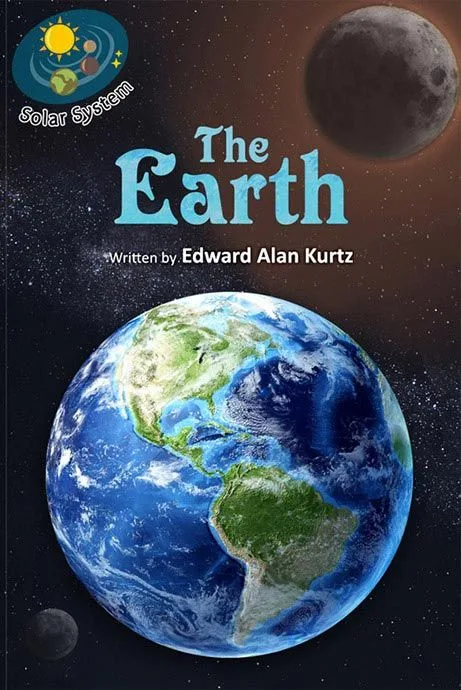 The EarthRead Along BookAges 7 to 9 years
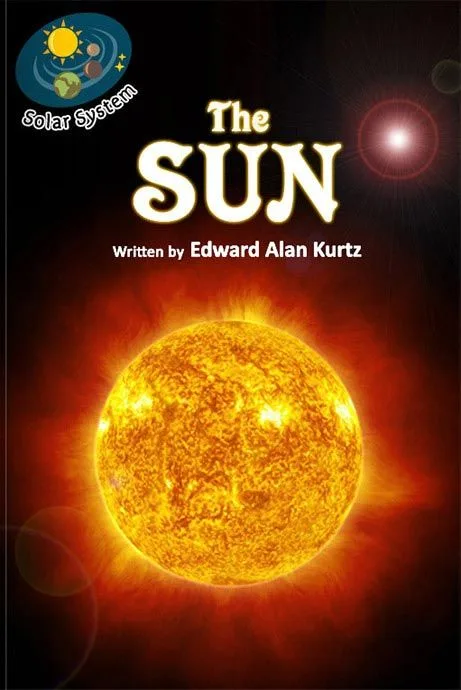 The SunRead Along BookAges 7 to 9 years
 The MoonRead Along BookAges 7 to 9 years
 Solar EclipseRead Along BookAges 7 to 9 years
 Lunar EclipseRead Along BookAges 7 to 9 years
 ConstellationsRead Along BookAges 7 to 9 years
 AstronautsRead Along BookAges 7 to 9 years
 AsteroidsRead Along BookAges 7 to 9 years
Frequently asked questions
What ages is this book for?
Ages 5 to 7 years, at Grade 1 and Level 2 (Easy Readers).
Is the book narrated?
Yes. It is a read along book, so a real human voice reads the story while words are highlighted one by one on screen.
Which apps carry this book?
Both the Reading and Math app and the Read Along App. The Comprehension quiz is a Reading and Math app feature.
How long is the book?
15 pages, 525 words, 5 minutes
Does this book have a quiz or activity?
Yes. It has a comprehension quiz. Quizzes and activities live in the Reading and Math app.
Start reading today
Try Smart Kidz Club for FREE.